
How Much Is Murano Glass Worth?
New, handmade Murano glass costs from about €70 for a pair of earrings to €350–7,400 for a vase and from €5,400 for a chandelier. What a piece is worth on resale depends on who made it, how, when, and in what condition. A signed vase by a famous twentieth-century furnace can sell for thousands at auction; a small unsigned souvenir animal is usually worth far less than it cost.
This guide gives real prices category by category, explains why genuine Murano glass is expensive, what makes a piece valuable and how to find out what yours may be worth.
Murano Glass Prices in 2026, Category by Category
These are the prices of the new, handmade pieces in our collection in October 2026. Other shops will differ, but the order of magnitude is the same anywhere genuine work is sold.
- Earrings: €70 a pair. Bracelets: €70–80. Necklaces: €100–130. Parures (matching sets): €115–235. See our Murano glass jewellery.
- Goblets and glasses: from €240 a piece; a tumbler made of murrine reaches €1,190. See goblets and glasses.
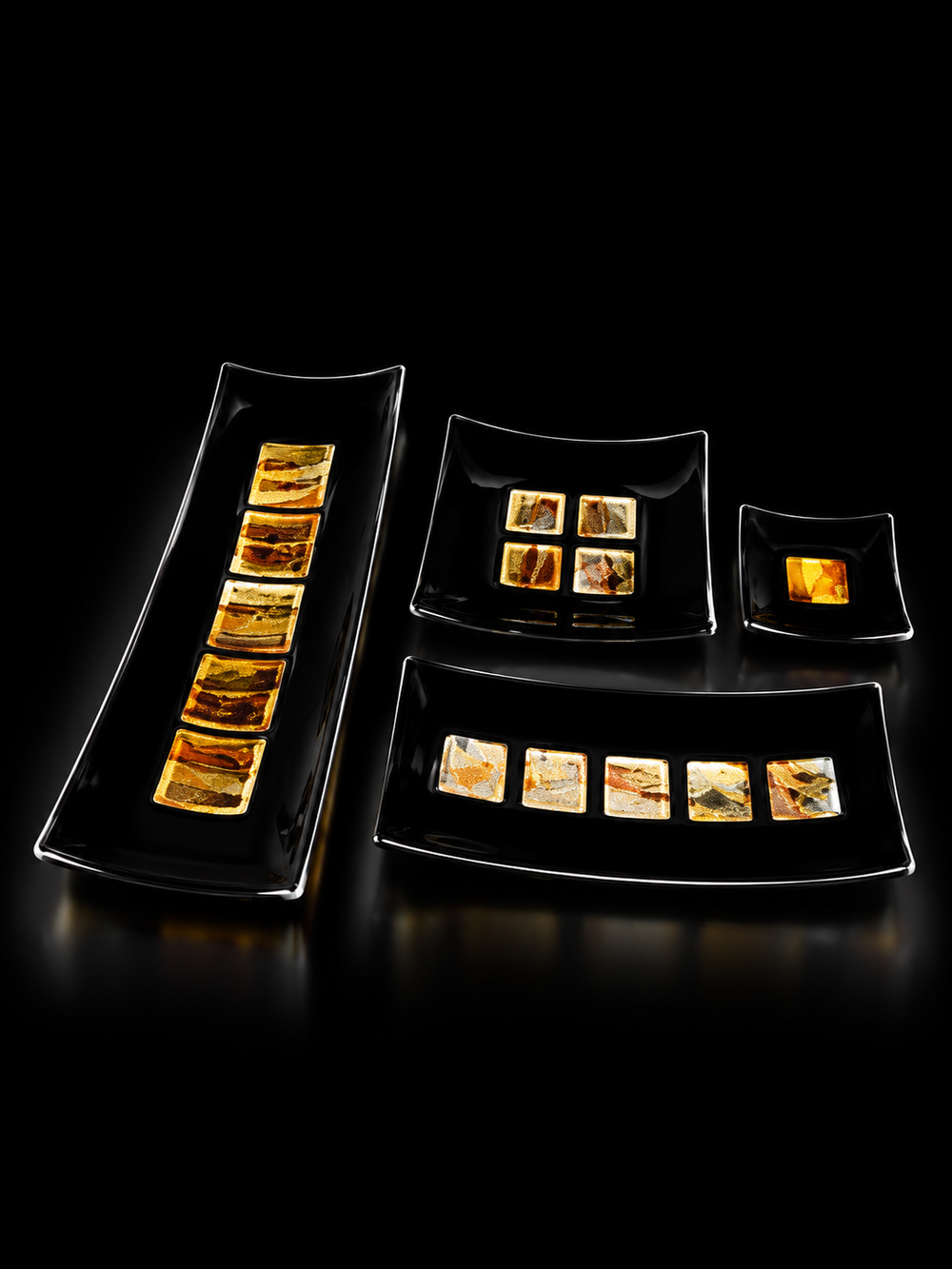
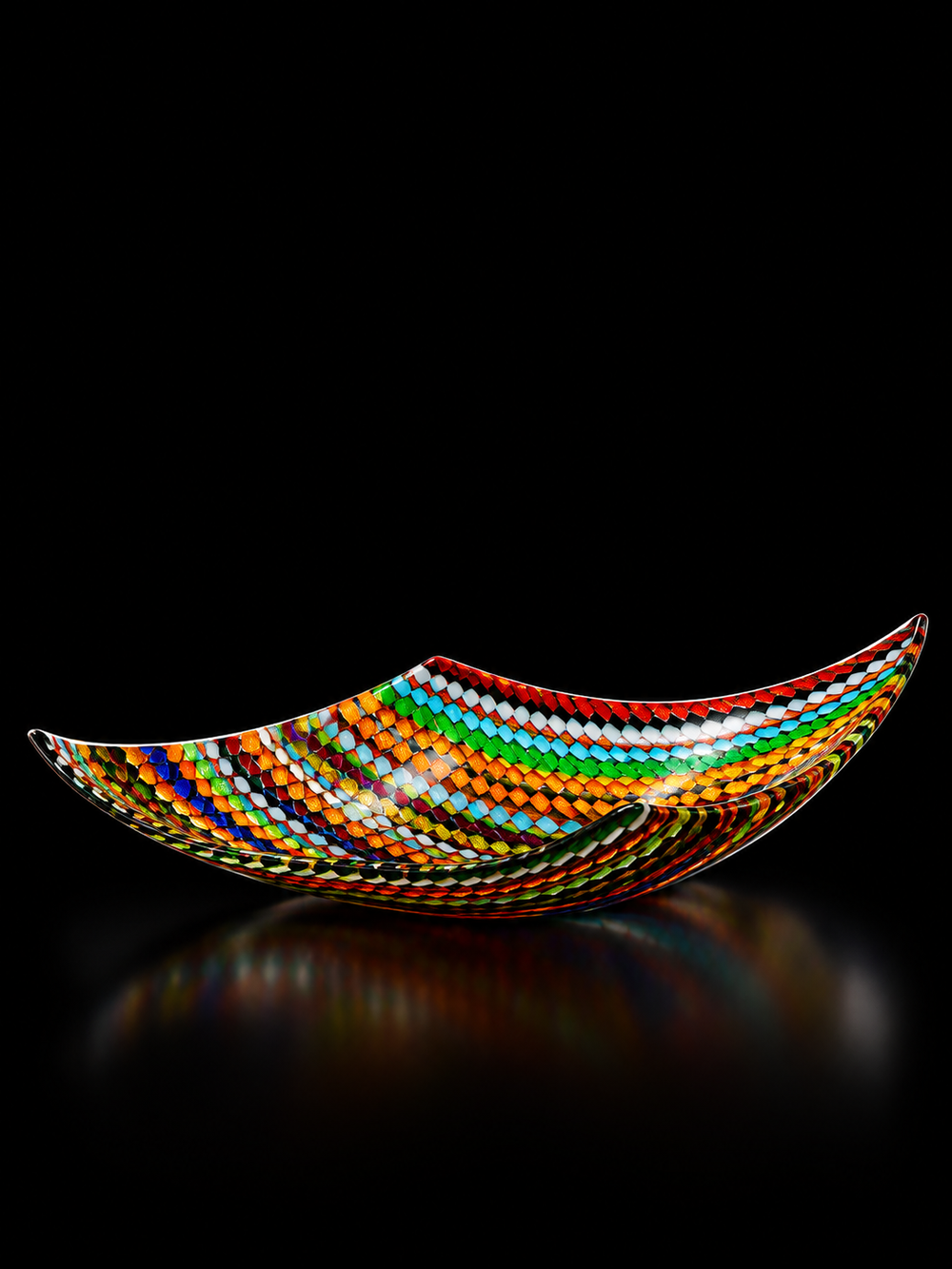
- Bowls and centrepieces: €150 for a small bowl with murrine or gold leaf, around €2,000 for a large blown bowl, up to €4,900. See bowls and centrepieces.
- Small millefiori animals: €220. Animal sculptures: €290–6,490, about half of them €750 or less. See animal sculptures.
- Vases: €350–7,390; about half of them cost €1,550 or less. See Murano glass vases.
- Table lamps: €1,600–5,400. Floor lamps: €4,500–13,000.
- Chandeliers: €5,400–48,900; about half of them €8,400 or less. See Murano glass chandeliers.
- Venetian mirrors: €2,100–14,900, and €9,000–16,100 for a mirror built around a television. See Venetian mirrors.
Prices rise with size, the number of colours and the hours of work. A chandelier is priced by its arms and its glass elements; a mirror by its engraved panels and glass flowers.
Why Is Murano Glass So Expensive?
Because almost nothing in it is industrial. A vase is gathered from the furnace, blown, shaped and finished by hand, usually by a master working with one or two assistants. A complex piece can take a day or more at the furnace, then a slow cooling in the annealing oven so that it does not crack.
The furnaces burn day and night, and energy is one of the largest costs on the island. Some materials are precious in themselves, such as the gold and silver leaf laid inside the glass. Not every attempt succeeds: a piece that cracks in cooling or comes out wrong is lost, and its cost falls on the ones that survive. Most pieces are also made in small numbers or to order, so there is no mass production to spread the cost.
Compared with industrial glass, then, a genuine Murano piece is expensive. Compared with any other object made by hand by a skilled team over many hours, it is not.
Are Murano Glass Pieces Worth Anything? An Honest Answer
Many people ask this about a piece they already own: a vase from a trip to Venice, an inherited bowl, a small glass animal. The honest answer is that most pieces are worth something, and only a few are worth a lot.
Small unsigned animals and souvenir objects, especially those bought cheaply in tourist shops, rarely resell for more than a fraction of their price. Many of them are not even made on Murano. At the other end, pieces by the great furnaces and designers of the twentieth century, such as Venini, Barovier & Toso, Seguso, Salviati, Carlo Scarpa, Fulvio Bianconi and Flavio Poli, are collected all over the world and sell at specialist auctions.
When you look up prices, compare sold prices, not asking prices. A dealer can ask anything; what a piece is worth is what someone actually paid for a similar one.
What Makes a Piece of Murano Glass Valuable
- The maker and the designer. A recognised furnace or designer is the strongest single factor.
- The technique. Demanding techniques such as sommerso, murrine, filigrana, incalmo or battuto show mastery and are worth more than plain blown glass.
- The period. The 1930s to 1970s are the most collected decades; contemporary pieces are valued mostly for their quality and their maker.
- Rarity. Unique pieces and short series are worth more than standard production.
- Condition. Chips, cracks, grinding and repairs reduce value sharply.
- Size and complexity. Larger and more complex pieces take more time, skill and risk to make.
- Signature, label and papers. An engraved signature, an original label, a certificate or a receipt support the attribution, and with it the price.
Real or Fake? Check Authenticity First
None of the above matters if the piece is not genuine. Imitations made in moulds abroad are sold every day as "Murano", in Venice and online, and they are worth very little.
Genuine handmade glass usually shows a pontil mark under the base, small irregularities and tiny bubbles, and no mould seams. The only official mark of origin is the Vetro Artistico® Murano trademark, created by a regional law of the Veneto in 1994; many older and many genuine pieces do not carry it, so its absence alone proves nothing. Our guides explain how to recognise authentic Murano glass and how to read marks, signatures and labels.
If you have a piece and want an informed view, our authentication opinion (€20, by email within 3 working days) studies your photos and tells you whether the piece is consistent with genuine Murano work and who may have made it. It is an opinion on authenticity and origin, not a valuation.
How to Find Out What Your Piece Is Worth
- Identify it. Look under the base for an engraved signature, an acid stamp or a label, and photograph them. Our marks guide shows the most common ones.
- Check the condition. Run a finger round the rim and the base, and look against the light for cracks and repairs.
- Find comparable sales. Search the archives of auction houses for the same maker, model and size, and note the prices actually paid.
- For insurance or a sale, ask a professional. A written valuation comes from a qualified appraiser or an auction house specialist in twentieth-century glass, usually after seeing the piece.
Value by Type: Vases, Figurines, Chandeliers, Jewellery, Millefiori and Mirrors
Vases
Vases are the heart of the collector market. Designs by known furnaces, especially in sommerso, murrine or filigrana, hold their value best. A large, flawless contemporary vase by a good furnace is priced for the hours that went into it.
Animals and figurines
Small animals are the most common souvenir and the most imitated. Signed figures by known makers and large sculptures, such as fish in sommerso or horses, are a different story; see our Murano glass sculptures.
Chandeliers
A chandelier's value depends on its size, the number of arms, the quality of the glass elements and how complete it is. Missing or replaced pieces lower it, and an old chandelier often needs new wiring before it can be used.
Jewellery
Murano beads are made one at a time at the flame, and a new piece is priced for that work rather than as an investment. Older strands of Venetian trade beads are a separate collecting field.
Millefiori
Antique millefiori paperweights and objects are collected; new millefiori is priced for the hundreds of slices of murrine set by hand. Our millefiori guide explains how to tell them apart.
Venetian mirrors
Antique Venetian mirrors, with their old mercury silvering, are rare and priced accordingly. New mirrors made in Murano in the Venetian style are priced for the hand-engraved panels and the glass flowers on the frame.
Is Murano Glass a Good Investment?
Sometimes, but it should not be the reason to buy. The pieces that have risen in value are the best works of recognised makers, in rare techniques and perfect condition, bought with their papers. Ordinary production pieces are bought to be lived with, and their value lies in that.
If you do buy with value in mind: buy authentic, prefer one exceptional piece to several ordinary ones, keep every certificate and receipt, and choose something you will be glad to see every day.
Is Murano Glass Cheaper in Venice?
Not necessarily. Venice has excellent furnaces and galleries, but also many shops selling imported imitations at "Murano" prices, and on the island itself a genuine piece costs what it costs anywhere. Buying online from a seller who documents each piece is often simpler, and the piece is delivered home insured. Our guide to buying Murano glass in Venice explains what to look for there.
Frequently Asked Questions
How much is a Murano glass vase worth?
A new handmade vase costs from about €350 to several thousand euros, depending on size and technique. A vintage vase is worth what comparable pieces by the same maker have sold for: from little for an unsigned souvenir to thousands for a documented design by a famous furnace.
Are Murano glass animals and figurines worth anything?
Small unsigned animals usually resell for little. Signed figures by known makers and large sculptures can be worth much more, especially in perfect condition.
Does Murano glass hold its value?
Authentic pieces by recognised makers, in good condition and with documentation, hold their value best. Generic production pieces are worth what someone will pay for them second-hand, usually less than their original price.
Does Murano glass have to be signed to be valuable?
No. Many important pieces were never signed and carried only a paper label that was later lost. A signature helps the attribution, but the technique, the quality and comparable pieces matter just as much.
Can you tell me what my piece is worth?
We do not give valuations. Our authentication opinion tells you whether a piece is consistent with genuine Murano work and who may have made it; for a value, ask an appraiser or an auction house specialist.
Choose a Piece Made to Last
Own an older piece? Our guide to vintage Murano glass explains how to date it, what to check and what it may be worth.
Every piece in our collection is handmade and arrives with a certificate of authenticity, insured shipping that is free across the European Union and 14 days to return eligible pieces. Explore our collector pieces, the vases, the chandeliers or the jewellery, or read what Murano glass is and why it is unlike any other glass.
The atmosphere photographs in this article are illustrations created with artificial intelligence; the product photographs show real pieces from our collection.
Discover Our Handcrafted Collection
Every piece is created by master artisans on the island of Murano, Venice — and accompanied by a certificate of authenticity.
Explore the Collection