
What Is Murano Glass?
Murano glass is glass made by hand on Murano, a small group of islands in the Venetian Lagoon, where the glassmakers of Venice have worked since 1291. It is blown and shaped at the furnace, one piece at a time, using techniques that have been handed down on the island for more than seven centuries. The name describes a place and a way of working, not a style: a clear goblet, a millefiori paperweight and a three-metre chandelier are all Murano glass if they were made there.
This guide explains what the word means, what the glass is made of, how it differs from "Venetian glass", and why it costs what it costs.
What Does "Murano" Mean?
Murano is first of all a place: seven small islands joined by bridges, about a kilometre and a half north of Venice, with fewer than five thousand residents. The name is very old. It is thought to come from Amurianum, a district of the Roman town of Altino on the mainland, whose people took refuge in the lagoon in late antiquity and carried the name with them.
Because the island has made glass for so long, the word has taken on a second meaning. When people say "a Murano", "Murano beads" or "a Murano chandelier", they mean glass from the island. So "Murano" on a label should mean one thing only: that the piece was made on Murano. As we explain below, it does not always.
Why the Glassmakers Are on Murano
Glass was made in Venice itself from at least the tenth century. In 1291 the Republic ordered the furnaces to move to Murano. The reason usually given is fire: Venice was built largely of wood, and furnaces burn day and night. Concentrating the trade on one island also made it easier to guard its secrets.
The Republic treated its glassmakers as a strategic asset. Masters enjoyed privileges that few craftsmen had, and their daughters could marry into noble families; in return they were forbidden to take their knowledge abroad. For about three hundred years Murano supplied the courts of Europe with the finest glass and mirrors that money could buy. Our history of Murano glass tells the whole story.
What Murano Glass Is Made Of
Murano glass is a soda-lime glass: silica sand, soda ash to lower the melting point, and lime to make the glass stable. It contains no lead, so it is not "crystal" in the modern technical sense. The famous Venetian cristallo, perfected by Angelo Barovier in the middle of the fifteenth century, was a soda glass purified until it was as clear as rock crystal.
This recipe matters. Soda glass stays soft over a wide range of temperatures, which gives the glassmaker time to pull, pinch, twist and add to a piece before it stiffens. That long working time is what makes the thin stems, the applied flowers and the fine threads of Murano possible.
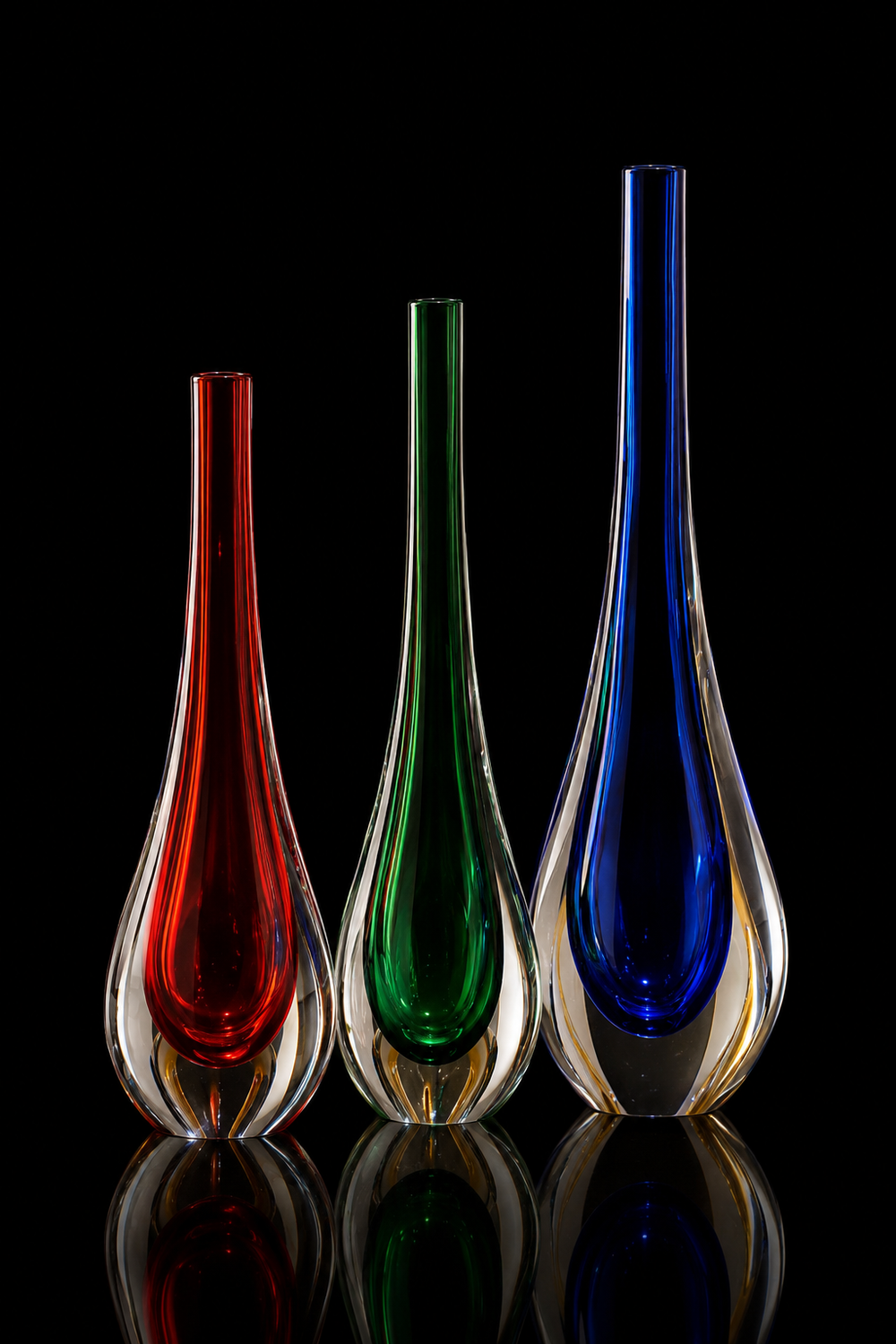
Colour comes from minerals melted into the batch: cobalt for blue, manganese for amethyst, copper for green and aquamarine, gold for ruby red. The colour is in the glass, not on it. Our guide to Murano glass colours and their meaning goes through them one by one.
How Murano Glass Is Made
The raw materials are melted overnight at about 1,400 °C. In the morning the glassmaker gathers a ball of molten glass on the end of a steel blowpipe and begins to work it at around 1,000 °C, returning it to the furnace every minute or so to keep it soft.
Almost nothing is done alone. The traditional team, the piazza, is led by the maestro, with a servente and a serventino who gather glass, bring parts and hold the piece while he shapes it. The tools have barely changed in centuries: the blowpipe, the pontil rod, a pair of spring tongs, shears, a wooden paddle and a block of wet wood.
When the piece is finished it goes into an annealing oven and cools slowly, over many hours, so that it does not crack from internal stress. Larger works such as chandeliers are made in dozens of separate parts and assembled cold. Our article on Murano glassblowing techniques follows the process step by step.
The Techniques That Make It Recognisable
Much of what people picture when they think of Murano glass is in fact a specific technique, invented or perfected on the island:
- Millefiori and murrine. Slices of patterned glass cane fused into a mosaic of tiny flowers. See our guide to millefiori glass.
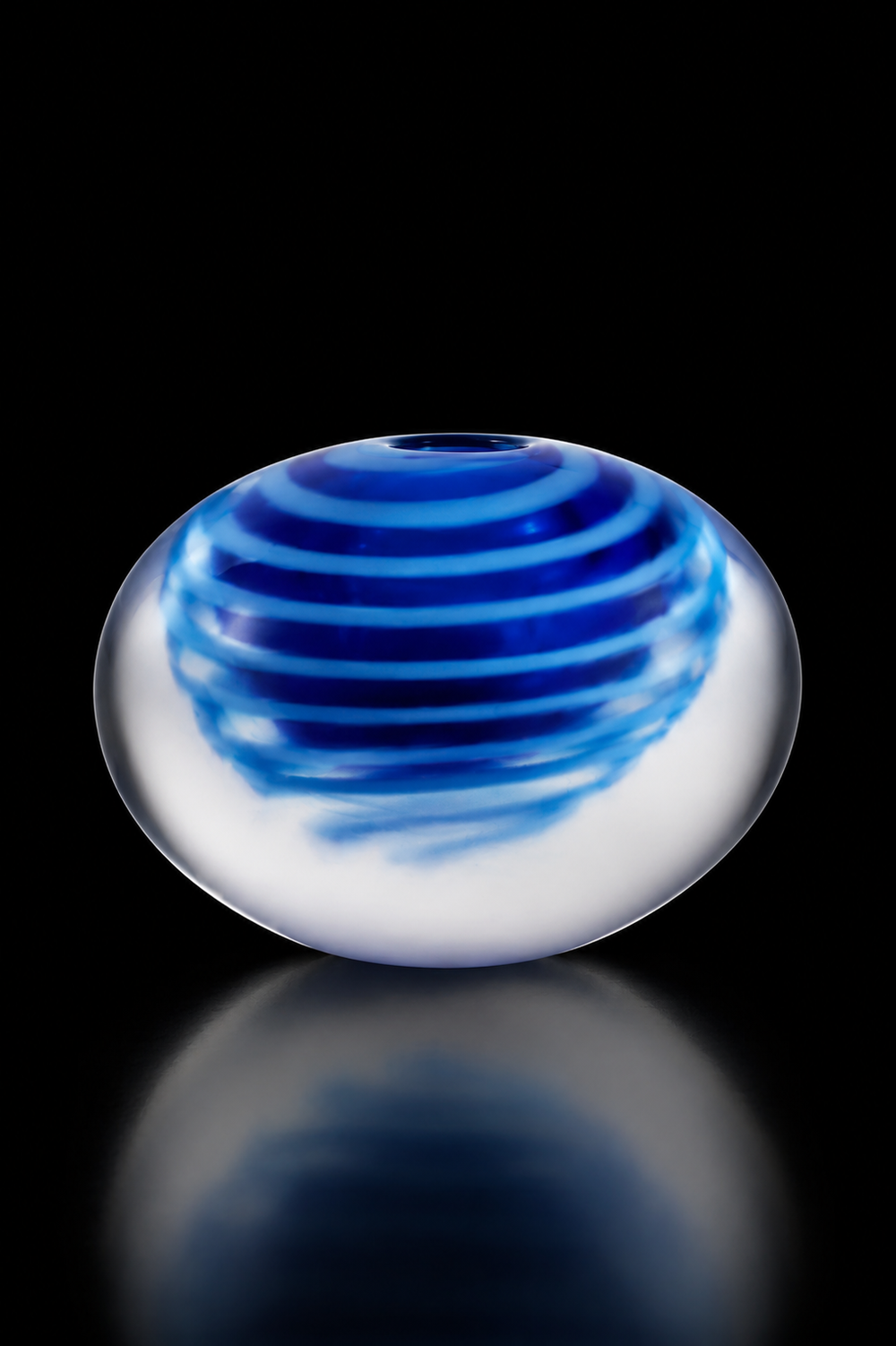
- Sommerso. Layers of different colours "submerged" one inside the other, in thick, heavy glass.
- Filigrana. Fine white or coloured threads running through clear glass, straight, twisted or crossed into a net.
- Avventurina. Glass that sparkles with tiny copper crystals, like gold dust.
- Lattimo. Opaque white "milk" glass, first made to imitate porcelain.
- Gold and silver leaf. Metal leaf trapped between layers of glass, which breaks into flecks as the piece is blown.
Murano Glass vs Venetian Glass
For most purposes they are the same thing. "Venetian glass" is the historical name for the glass of the Venetian Republic, and since 1291 that glass has been made on Murano. Museums and auction houses tend to say Venetian glass for older pieces, especially from the Renaissance; shops and makers today say Murano glass.
There is one practical difference. "Venetian" and "Venetian style" are also used loosely for glass that only looks the part and was made elsewhere. "Murano glass" is tied to the island, and the island's production is protected by a trademark, Vetro Artistico® Murano, created by a law of the Veneto Region in 1994 and granted only to furnaces that work on Murano. If origin matters to you, look for Murano, and for proof.
Why Is Murano Glass So Expensive?

Because of time, skill and waste. A maestro trains for well over ten years before he leads a team. A single goblet can take a team of three half an hour or more; a chandelier takes days of furnace work and more days of assembly. The furnaces burn gas around the clock. Colours such as ruby red need gold. And not every piece survives: glass that cracks in the annealing oven is thrown back into the pot.
That said, Murano glass is not only for collectors. A pair of handmade glass earrings costs a few tens of euros, a small vase or sculpture a few hundred, and a large chandelier several thousand. What is never true is a "Murano" chandelier for the price of a factory lamp.
Is Murano Glass Valuable?
It can be, and it depends on four things: who made it, when, how well, and in what condition. Rare mid-century pieces from the great design houses, such as Venini, Barovier & Toso and Seguso, have sold at auction for tens of thousands of euros and more. A well-made contemporary piece holds its value as a handmade object with a known origin. A mass-produced souvenir, real or not, has little resale value.
We would not suggest buying glass as an investment. Buy a piece because you want to live with it, and keep the paperwork. If you are curious about the market, our article on Murano glass as an investment looks at what collectors pay for and why.
What Is Made in Murano Glass Today
The island still produces almost everything it is known for:
- Chandeliers and lighting, from classic Rezzonico models with flowers and leaves to contemporary designs.
- Vases, bowls and centrepieces in blown glass.
- Sculptures, worked solid at the furnace.
- Jewellery: beads made one at a time over a flame, strung into necklaces, bracelets and earrings.
- Goblets and glasses, the oldest speciality of all.
- Venetian mirrors, with frames of engraved and applied glass.
How to Know It Is Really Murano Glass
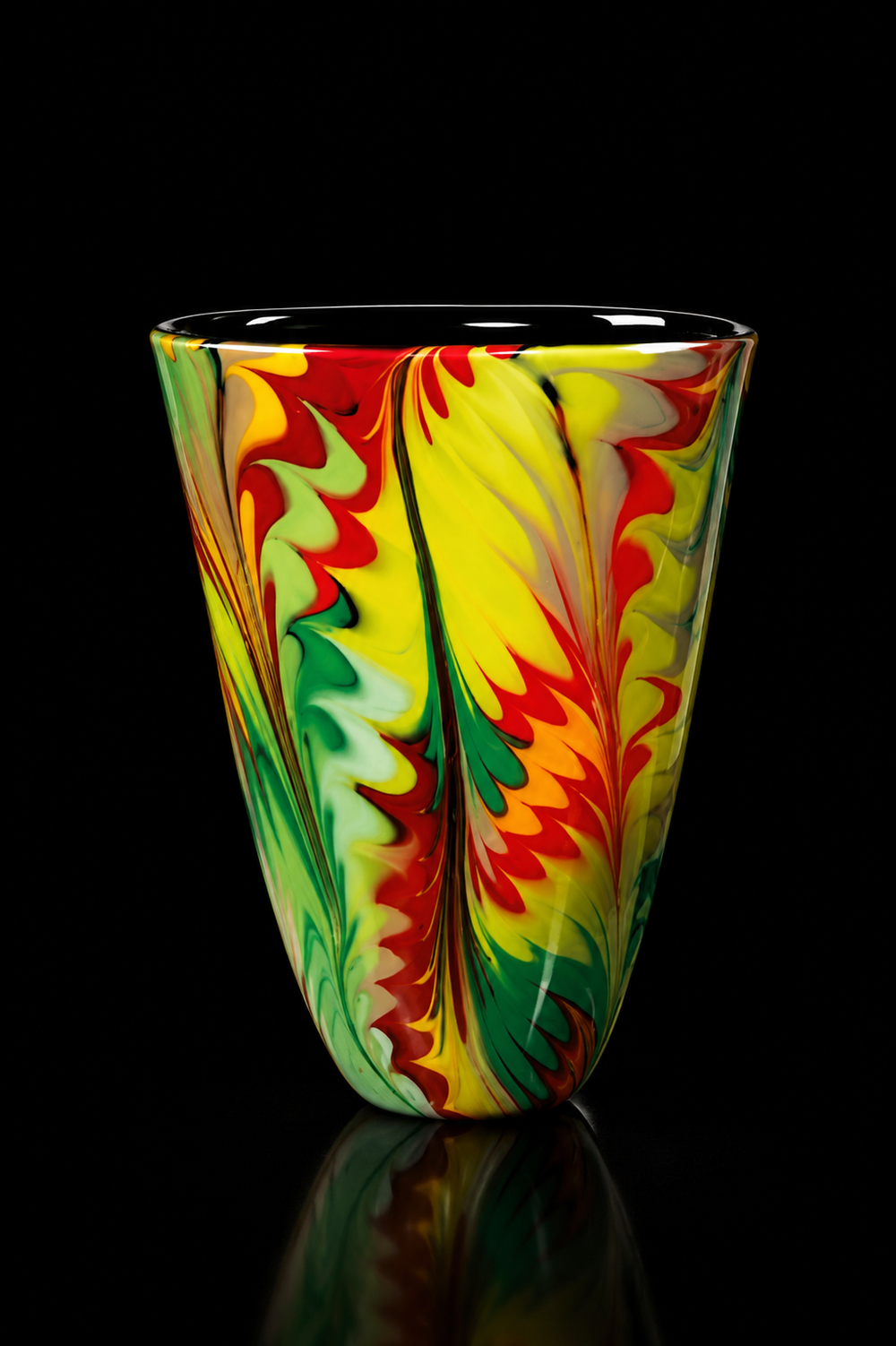
Far more glass is sold as "Murano" than the island could ever produce. Much of it is made by machine, a long way from Italy. A genuine piece shows the hand that made it: a pontil mark under the base, colour that runs through the glass, small differences from one piece to the next. It also comes with a name: the furnace, the trademark, a certificate that can be checked.
Our guide on how to recognise authentic Murano glass lists seven signs you can check yourself, and our guide to marks, signatures and labels explains what is written, engraved or stuck on the base.
Frequently Asked Questions
Is Murano glass the same as Venetian glass?
In practice, yes. Venetian glass has been made on Murano since 1291, so the two names describe the same tradition. "Venetian style", however, usually means glass made somewhere else.
Is Murano glass crystal?
No. Murano glass is a soda-lime glass and contains no lead. The clear glass called cristallo takes its name from rock crystal, which it was made to resemble.
Is all Murano glass made in Murano?
All genuine Murano glass is. The name is often used for glass made elsewhere, which is why the furnaces of the island have a protected trademark, Vetro Artistico® Murano, and why a serious seller names the furnace.
Does Murano glass break easily?
It is glass, so it will break if it is dropped or knocked. Solid sculptures and thick-walled vases are sturdy in everyday use; fine goblets and chandelier flowers need a gentle hand. Our care guide explains how to clean and move them.
Is Murano glass still made today?
Yes. Several dozen furnaces work on the island today, some run by families that have made glass for many generations, alongside independent masters and bead makers.
Can you visit the glassmakers in Murano?
Yes. Murano is about ten minutes by vaporetto from the Fondamente Nove in Venice, several furnaces give demonstrations, and the Glass Museum tells the history of the craft. Our guide explains how to get to Murano from Venice.
Murano Glass, From the Island to Your Home
We sell glass made by furnaces on Murano, and every piece comes with a certificate of authenticity issued by us, recording the furnace of origin, the technique and a reference number you can verify online. Explore our collections of Murano glass.
The atmosphere photographs in this article are illustrations created with artificial intelligence; the product photographs show real pieces from our collection.
Discover Our Handcrafted Collection
Every piece is created by master artisans on the island of Murano, Venice — and accompanied by a certificate of authenticity.
Explore the Collection