
Murano Glass Picasso Heads: History, Makers and Value
Search for Murano glass sculpture and sooner or later you meet them: bright glass heads with two eyes on one side of the face, a nose in profile, hair in blocks of blue and yellow. Sellers call them Picasso heads. Some are serious works by Murano masters and sell for thousands. Many more are decorative pieces, and a good number were never near the island. This guide explains where the idea comes from, who really makes them, what they are worth and how to tell one kind from another.
What Is a Murano "Picasso Head"?
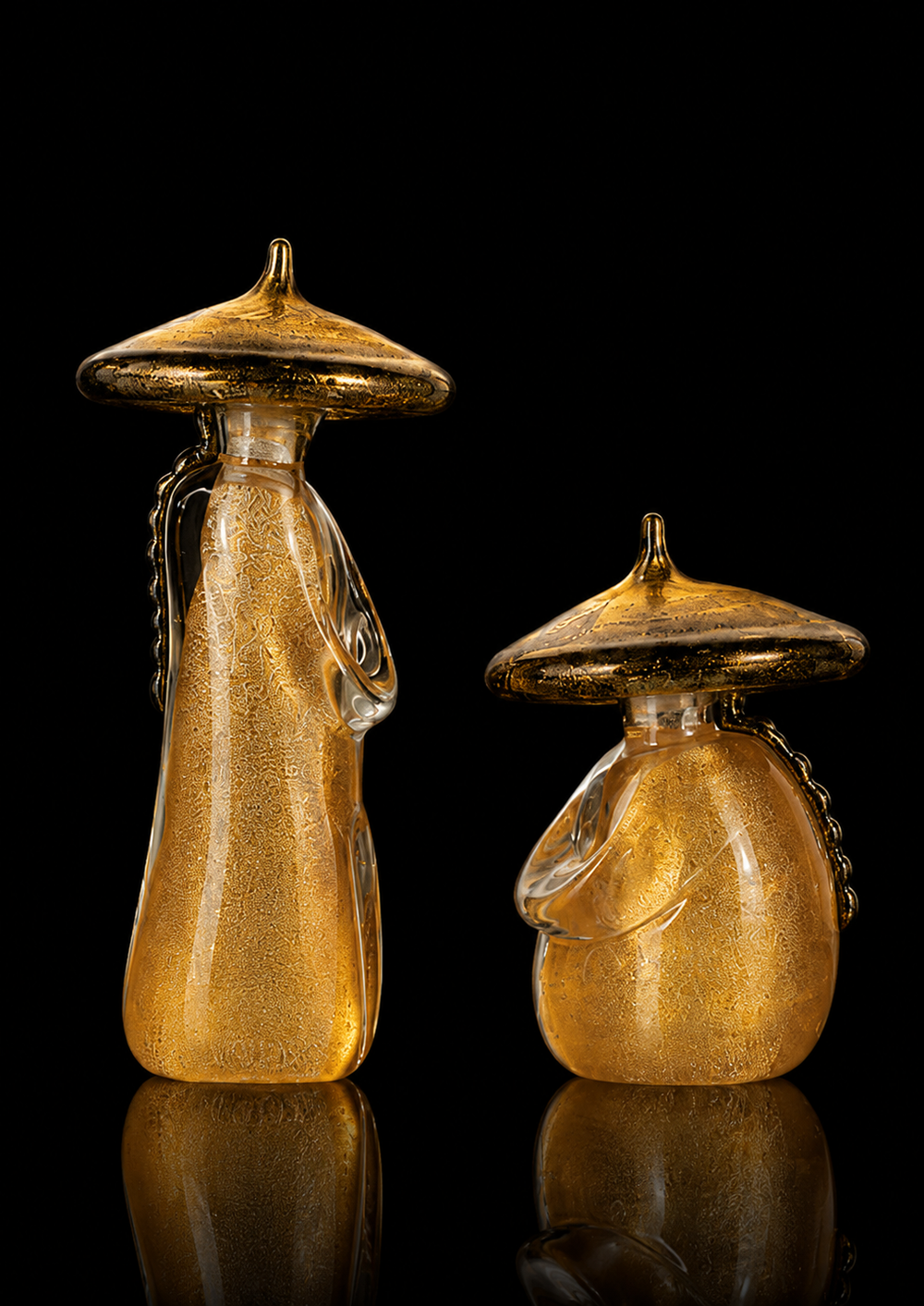
It is a sculpture of a human head, usually a woman's, made in solid coloured glass in the Cubist manner: the face seen from the front and in profile at the same time, strong black outlines, flat areas of pure colour. The name is a description of the style. With rare exceptions these pieces are not works by Pablo Picasso. The honest titles say so: Omaggio a Picasso (Homage to Picasso), "in the manner of Picasso", "after Picasso".
There is, however, a real connection between Picasso and the furnaces of Murano, and it is the reason the style exists.
Did Picasso Really Work with Murano Glass?
Yes, though not with his own hands. The story belongs to Egidio Costantini (1912–2007), born in Brindisi and Venetian by adoption. Costantini believed that glass could stand beside painting and sculpture if great artists designed for it and Murano's masters executed the designs. In 1950 he founded a study centre for painters working with Murano glass, and in 1954 he travelled to France to win over the most famous artists of the day. He met Picasso that year at Vallauris.
The project found its name when the poet Jean Cocteau called it La Fucina degli Angeli, the Forge of the Angels. Picasso, Jean Arp, Max Ernst, Marc Chagall, Alexander Calder and others gave Costantini drawings; glassmakers on Murano turned them into sculpture under his direction. Picasso did not blow glass. He supplied the drawings and left the translation to the furnace.
The gallery closed in 1958 for lack of money and reopened in 1961 with the help of the American collector Peggy Guggenheim, who showed the Fucina's works in her palace on the Grand Canal in 1964. The following year they were shown at the Museum of Modern Art in New York. A series of glass sculptures after Picasso's sketches is still in the Peggy Guggenheim Collection in Venice.
Those are the true "Picasso glass" pieces: few, documented and found in museums and at major auctions. The heads you see for sale today come from a later chapter.
Walter Furlan and the "Omaggio a Picasso"
The name most closely tied to the Picasso head is Walter Furlan (1931–2018). Born in Chioggia, at the southern end of the Venetian lagoon, he went to work in the furnaces as a boy and became a master at twenty. He admired Chagall, Modigliani and above all Picasso, and he spent much of his career translating their figures into solid glass.
His portraits after Picasso's Marie-Thérèse Walter and Dora Maar, and his Picasso-inspired bulls, are the pieces collectors look for. They are signed, usually titled Omaggio a Picasso, and his work is held in museum collections. Other Murano workshops have made their own homages in the same spirit, which is why the style has become a recognisable part of the island's sculpture.
How a Glass Head Is Made
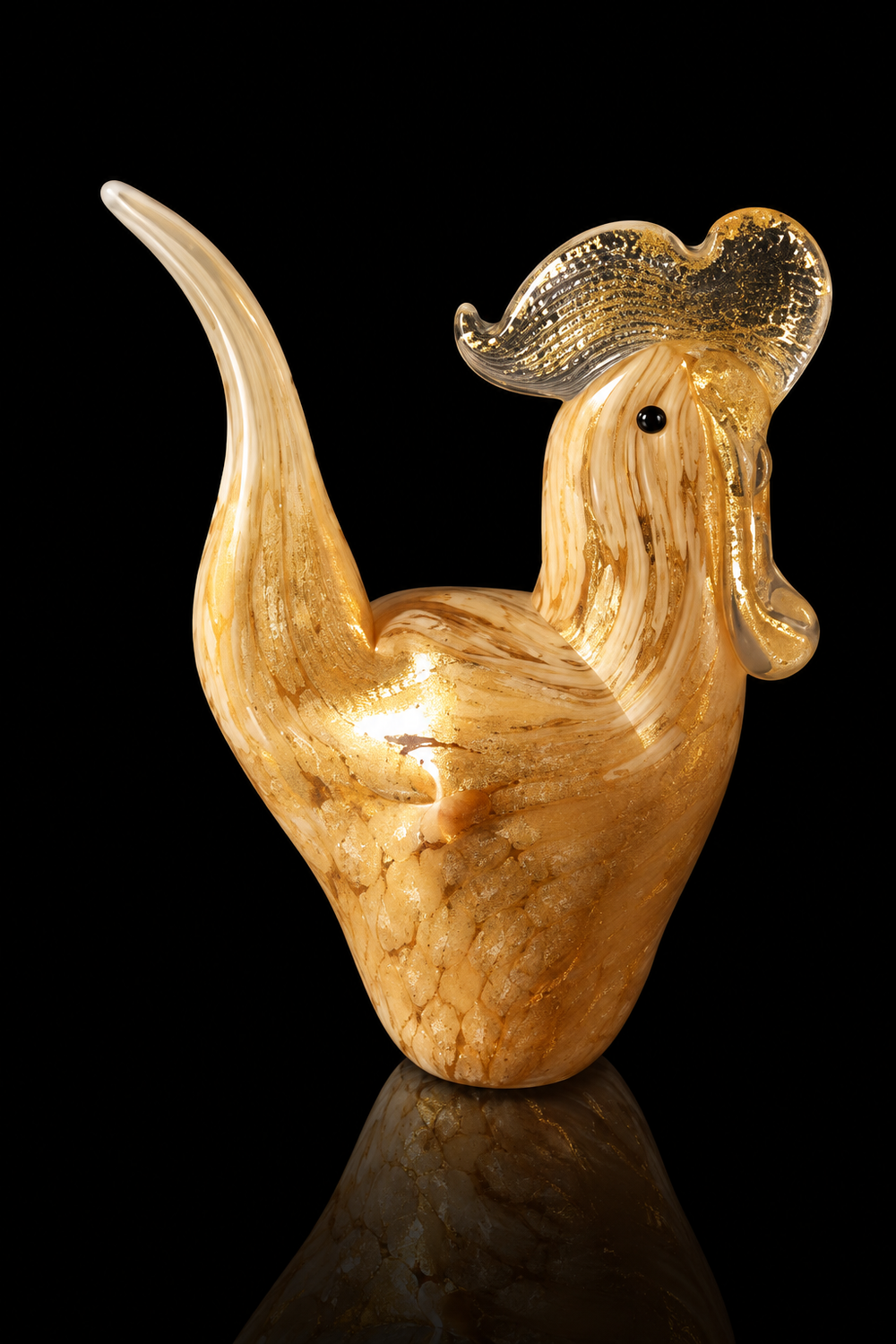
A genuine head is not blown into a mould and painted afterwards. It is built hot, from a mass of glass on the end of an iron rod, and shaped with tools while the glass is soft. The colours are glass too: pieces of coloured glass are laid on and worked in while everything is still glowing, and the black lines are threads of dark glass, not paint. The work has to be finished before the piece cools, and a head with several colours means returning to the furnace again and again.
When the sculpture has cooled slowly in the annealing oven, the base is ground flat and polished, and the master engraves a signature. Our guide to Murano glass techniques explains the vocabulary of the furnace in more detail.
Four Kinds of "Picasso Head" on the Market
- Fucina degli Angeli works after Picasso's drawings. Museum pieces. When one appears at auction it comes with a documented history.
- Signed homages by Murano masters. Furlan's are the best known. Engraved signature on the base, often a title and a certificate from the furnace or gallery.
- Unsigned decorative heads made on Murano. Real handmade glass in the same style, sold without a famous name. Attractive, but worth much less.
- "Murano style" imports. Moulded or lightly worked glass made elsewhere, often with painted details, sold online for very little. They are not Murano glass, whatever the listing says.
What Is a Murano Picasso Head Worth?
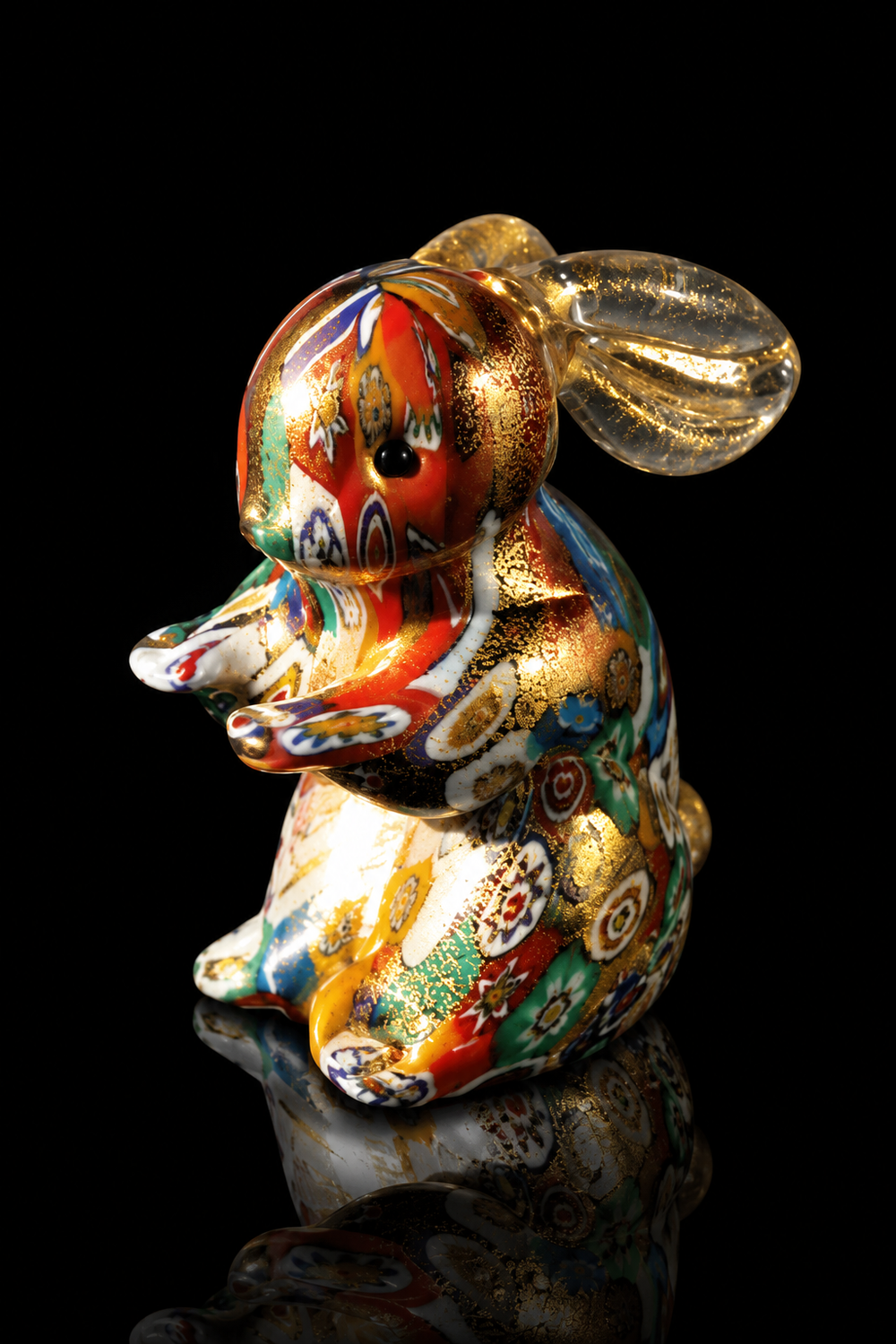
It depends entirely on which of the four it is. For signed Furlan homages, published auction results in recent years are mostly between about $1,000 and $2,000, with larger and more important sculptures reaching several thousand; the highest published result is around $10,000. Dealers and galleries ask more than auction prices, as they do for any art.
Unsigned decorative heads from the island usually sell for a few hundred euros. Imported "Murano style" heads sell for tens of euros, which is what they are worth.
Within each group, value follows the same things: the signature and who it belongs to, the size and number of colours, the condition (chips on the base and scratches matter), and the paperwork that came with the piece. For how these factors work across Murano glass in general, see is Murano glass a good investment?
How to Recognise a Real One
- Weight. A solid glass head of 30 centimetres weighs several kilos. A light one is hollow or moulded.
- Colour inside the glass. Turn it in the light. The colours and black lines should be glass within glass, with depth. Paint sits on the surface and can be felt with a fingernail.
- The base. Ground flat and polished, often with the trace of the pontil, the point where the piece was held. A rough moulded seam is a bad sign.
- The signature. Engraved into the glass, not printed on a sticker. Compare it with documented examples of the same maker.
- Small irregularities. No two handmade heads are identical. A row of perfectly identical ones is a production line.
- Provenance. A certificate, a gallery receipt, an old label. They do not prove everything, but their absence on an expensive piece should be explained.
The general signs are the same as for any piece from the island, and we go through them in how to recognise authentic Murano glass.
Do We Sell Picasso Heads?
Not at the moment, and we would rather say so plainly. Our Murano glass sculptures are made by furnaces on the island in the same hot-worked solid glass, in other subjects.
If you already own a head, or are about to buy one and want a second pair of eyes, we offer a photo-based authenticity opinion for €20. You send photographs, and we tell you within three working days whether, in our opinion, the piece is Murano glass and why. It is an opinion on authenticity only: we do not estimate value.
Frequently Asked Questions
Are Murano Picasso heads made by Picasso?
No. Picasso gave drawings to Egidio Costantini's Fucina degli Angeli in the 1950s and 1960s, and Murano glassmakers turned them into sculpture. The heads sold today are homages in his style by Murano masters such as Walter Furlan, or decorative pieces by other workshops.
How much is a Murano glass Picasso head worth?
Signed homages by Walter Furlan have mostly sold at auction for about $1,000 to $2,000 in recent years, more for large or important pieces. Unsigned decorative heads sell for a few hundred euros, and imported imitations for very little.
How do I know if my Picasso head is real Murano glass?
Check the weight, the base and the signature. A genuine piece is heavy solid glass, has a ground and polished base, colours that are part of the glass, and usually an engraved signature. If you are unsure, an expert opinion from photographs can help.
Who was Walter Furlan?
A Murano master glassmaker, born in Chioggia in 1931, who became a master at twenty and died in 2018. He is best known for his glass sculptures in homage to Picasso, Modigliani and Chagall.
The atmosphere photographs in this article are illustrations created with artificial intelligence; the product photographs show real pieces from our collection.
Discover Our Handcrafted Collection
Every piece is created by master artisans on the island of Murano, Venice — and accompanied by a certificate of authenticity.
Explore the Collection