
How to Clean and Care for Murano Glass
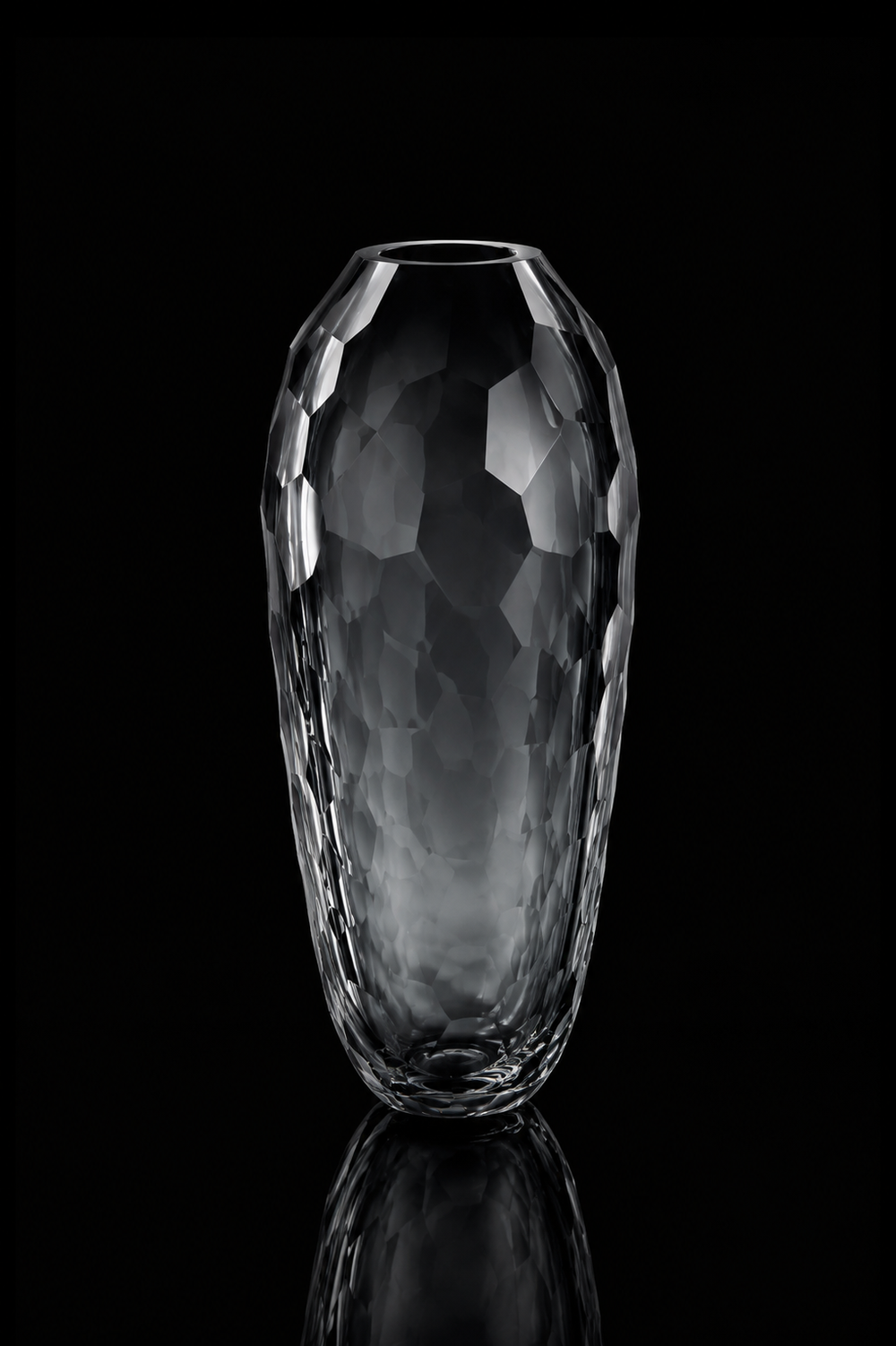
To clean Murano glass, dust it with a soft, dry cloth, wash it by hand in lukewarm water with a drop of mild soap, and dry it straight away with a lint-free cloth. Never put it in the dishwasher, never use abrasives, and never expose it to sudden changes of temperature. That is almost all there is to it.
This guide goes through each kind of piece, vases, glasses, chandeliers, jewellery and Venetian mirrors, and answers the questions people ask most: cloudy vases, blackened bracelets, chips and repairs.
Everyday Dusting
Dust is the main enemy of brilliance, and the gentlest cleaning is the best. Use a dry microfibre cloth or a soft brush, the kind used for make-up or photography, for flowers, leaves and engraved details. Hold the piece by its body, not by a handle, a stem or a petal, and work over a soft surface such as a folded towel, never over a stone floor.
How to Wash Murano Glass by Hand
- Line a plastic basin with a towel, or put a rubber mat in the sink.
- Fill it with lukewarm water, never hot, and add a drop of mild washing-up liquid.
- Wash one piece at a time with a soft sponge or cloth. Use a soft bottle brush inside vases.
- Rinse in water at the same temperature.
- Dry at once with a lint-free cloth, inside and out, so that no water marks are left.
Avoid scouring pads, powders, metal brushes and strong chemicals. Pieces with gold or silver leaf on the surface, enamel or applied decoration should only be wiped with a damp cloth.
Can Murano Glass Go in the Dishwasher?
No. The heat, the strong detergents and the knocks of a dishwasher cycle can dull the surface for good, attack gold leaf and enamels, and crack a piece through thermal shock. The milky film a dishwasher leaves over time is not dirt but etching of the glass, and it cannot be washed off. This applies to Murano goblets and drinking glasses too: wash them by hand, one at a time.
Cloudy Glass and Limescale in Vases

Vases that hold flowers often keep a white ring or a cloudy layer inside. This is usually limescale from the water, and it can be removed. Fill the vase with lukewarm water and white vinegar in equal parts, leave it for a few hours or overnight, then wash, rinse and dry it as above. For narrow necks, a spoonful of uncooked rice swirled with the vinegar water helps loosen deposits without scratching.
If the cloudiness does not change at all, the surface itself is etched, by years of standing water or by a dishwasher. That damage is permanent; only a glass restorer can sometimes reduce it by polishing. To prevent it, change the water often and dry the vase when it is empty.
How to Clean a Murano Chandelier
A chandelier needs a light dusting every month or two and a thorough clean once a year.
- Without taking it down: switch it off and let the bulbs cool. Wearing cotton gloves, wipe each arm, leaf and cup with a soft cloth, slightly dampened with water and a drop of mild soap, then with a dry one. Spray nothing directly onto the chandelier: liquid must never reach the sockets or the wiring.
- The thorough clean: photograph the chandelier from several sides first. Take the glass elements off one at a time onto a padded table, wash and dry each by hand as above, dust the frame, and put everything back following your photos.
Large chandeliers are best left to a professional, especially if they hang high. Our guide on how to mount a chandelier explains how the parts fit together.
Caring for Murano Glass Jewellery

Glass beads are hard and do not change colour, but the metal parts of a piece, the clasp, the wire and the small spacers, react with the world around them. Put your jewellery on last, after perfume, hairspray and creams, and take it off before swimming, showering, the sea or exercise. Wipe the beads with a soft, slightly damp cloth and dry them. Store each piece on its own, in a pouch or a lined box, so that beads do not knock against each other.
Why a bracelet turns dark: when a Murano bracelet or necklace seems to darken, turn black, green or yellowish, it is almost always the metal, not the glass. Sweat, perfume, chlorine and salt water oxidise metal findings over time. Keeping the piece dry and away from cosmetics slows it down; a jeweller can clean or replace the metal parts.
Venetian Mirrors and Engraved Glass
Dust the frame, the engraved panels and the glass flowers with a soft brush. For the mirror itself, spray a mild glass cleaner onto a cloth, never onto the mirror, so that no liquid runs behind the glass or into the joints of the frame, where moisture can damage the silvering. Dry the edges carefully. Never hang a mirror above a bath or a shower, or in a room where it will stay damp.
Displaying and Storing Murano Glass
- Choose stable shelves and keep pieces back from the edge, out of reach of pets and small children.
- Avoid sudden changes of temperature: not straight above a radiator or a fireplace, not next to a window left open in winter.
- Glass colours do not fade in the light, because they are made with metal oxides melted into the glass.
- To store a piece, wrap it in acid-free tissue and then in bubble wrap, and never stack bowls or plates without soft layers between them.
Moving and Shipping Murano Glass
Wrap each piece, and each loose element of a chandelier, on its own. Fill hollow pieces with soft paper so they cannot flex, and pack them upright in a double box with cushioning on every side. Keep the wooden crates that mirrors and chandeliers arrive in: they are the safest way to move them again.
Can Murano Glass Be Repaired?

Often, yes. A small chip on a rim or a base can usually be ground and polished by a glass restorer, and a broken piece can be bonded with special resins, though the repair stays visible and lowers the value of a collectable piece. Missing or broken elements of a chandelier, such as arms, leaves or cups, can usually be made again to match. If a piece bought from us ever arrives damaged, contact us: every shipment is insured, and we arrange a replacement or a refund.
Frequently Asked Questions
Can Murano glass go in the dishwasher?
No. Wash it by hand in lukewarm water with a mild soap and dry it at once. A dishwasher can etch the surface permanently and damage gold leaf and enamels.
How do I remove cloudy water stains from a Murano vase?
Fill it with lukewarm water and white vinegar in equal parts, leave it for a few hours, then wash and dry it. If the cloudiness does not change, the glass is etched and the mark is permanent.
Why is my Murano bracelet turning black?
It is the metal parts, not the glass. Sweat, perfume, chlorine and sea water oxidise them over time. Keep the bracelet dry, put it on after cosmetics and take it off before swimming.
How often should I clean a Murano chandelier?
Dust it lightly every month or two and give it a thorough clean, element by element, once a year.
Can I put water and flowers in a Murano vase?
Yes. Change the water often, empty and dry the vase when you remove the flowers, and remove limescale with vinegar if a ring forms.
Enjoy Your Murano Glass for a Lifetime
Treated gently, Murano glass keeps its brilliance for generations. Explore our Murano glass vases, chandeliers, goblets and glasses and jewellery, or read how to recognise authentic Murano glass.
The atmosphere photographs in this article are illustrations created with artificial intelligence; the product photographs show real pieces from our collection.
Discover Our Handcrafted Collection
Every piece is created by master artisans on the island of Murano, Venice — and accompanied by a certificate of authenticity.
Explore the Collection