
A Thousand Years of Glass: The Story of Murano
Few crafts can claim a history as rich, as guarded, or as influential as that of Murano glass. For more than a thousand years, a small cluster of islands in the Venetian lagoon has produced some of the most coveted glass on earth - objects that have adorned palaces, cathedrals and royal courts across every continent. To understand why authentic Murano glass is so prized today, you have to understand the extraordinary story behind it.
Ancient Roots
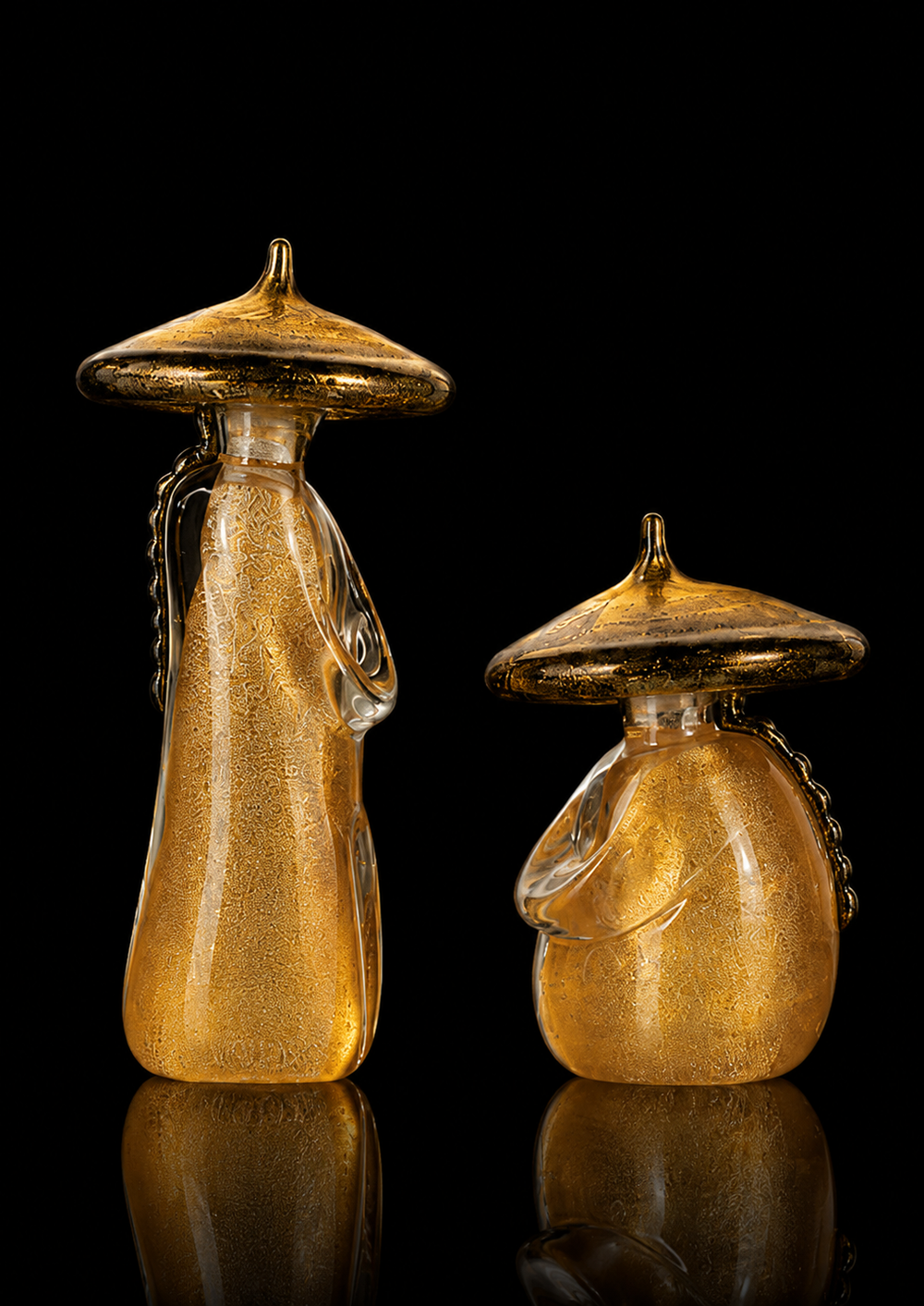
Glassmaking in the Venetian region traces back to Roman times, when techniques inherited from the Eastern Mediterranean and the ancient world first reached the lagoon. Excavations on the nearby island of Torcello have turned up glass furnace remains dating to the 7th century - proof that Venetians were melting sand into glass long before the Republic existed. By the time Venice rose as a maritime superpower, its merchants and craftsmen had absorbed glassmaking knowledge from Byzantium, the Islamic world and beyond, blending it into something entirely their own.
1291: The Furnaces Move to Murano
The defining moment came in 1291, when the Venetian Republic ordered every glass furnace moved from the city of Venice to the island of Murano. The official reason was fire safety: the intense heat of the furnaces threatened a city built largely of wood. But the decision had a second, far-reaching consequence. By concentrating all the glassmakers on a single island, the Republic could protect - and control - their priceless secrets. From this point on, "Murano glass" and "Venetian glass" become the same story.
The Golden Age of Venetian Glass
From the Renaissance onward, Murano entered a golden age. In 1450, the master Angelo Barovier achieved what no one else in Europe could: cristallo, a remarkably clear, colourless glass named for its resemblance to rock crystal. It was, by some accounts, the single most consequential invention in the history of glassmaking - within decades, Venetian cristallo drinking vessels were the most coveted tableware in every royal court in Europe. Murano's masters went on to perfect enamelling, gilding, and the intricate threadwork of filigrana. Murano mirrors, made with a closely guarded mercury-and-tin process, became status symbols worth more than paintings by the great masters - so prized that in 1664 France's finance minister Colbert secretly smuggled a handful of Murano's own glassmakers out of the Republic to break its monopoly, founding the manufactory that would later produce the 357 mirrors of Versailles' Hall of Mirrors. For nearly three centuries, Venice held a near-total monopoly on fine glass, and the wealth that flowed back to the lagoon was immense.
Masters, Secrets and Privileges

The glassmakers of Murano occupied a unique position in Venetian society. Recognised as artists rather than mere artisans, master glassblowers were granted special privileges: their daughters could marry into noble families, and their status was protected by law. Yet the same laws that elevated them also bound them. The secrets of Murano glass were considered state treasures, and masters were forbidden to leave the Republic on pain of death - a measure of just how valuable those secrets were, and precisely why Colbert's smuggled glassmakers were taking their lives in their hands.
Decline and Rebirth
By the eighteenth century, competition from Bohemia and the changing fortunes of the Venetian Republic sent Murano into decline. The fall of the Republic to Napoleon in 1797 dealt a further blow, and many furnaces went cold. But the story did not end there. In 1859, Antonio Salviati founded a furnace specifically to revive Murano's fortunes for the export market, and in the decades that followed a determined revival - led by figures who rediscovered lost techniques such as murrina and filigrana - breathed new life into the island. The founding of the Murano Glass Museum in 1861 and renewed artistic ambition restored the island's reputation.
The Twentieth Century: Art Glass Reborn

The twentieth century brought a creative renaissance. Visionary furnaces and designers - names like Venini, Barovier & Toso and Seguso, working with artists such as Carlo Scarpa and Flavio Poli - reimagined Murano glass as modern sculpture. Techniques like sommerso and battuto turned vases and bowls into collectible works of art that now command high prices at auction worldwide, and Murano's chandeliers found their way into palaces and grand hotels across the globe.
Murano Today
Today, authentic Murano glass is still mouth-blown by master glassblowers on the island, using the same fundamental techniques refined over centuries. It remains a living tradition - one threatened by mass-produced imitations, yet kept alive by the families and maestri who carry the craft forward. Every genuine piece is a direct descendant of that thousand-year story.
Why This History Matters When You Buy
Understanding Murano's history is more than academic - it is practical. The name "Murano" carries the weight of a millennium of mastery, which is exactly why it is so widely counterfeited. When you buy authentic Murano glass with a certificate of authenticity, you are not just acquiring a beautiful object; you are taking ownership of a piece of that unbroken history.
Frequently Asked Questions
Why was glassmaking moved to Murano?
In 1291 the Venetian Republic moved the furnaces to Murano officially to reduce fire risk in Venice, but also to concentrate and protect the glassmakers' valuable secrets.
How old is Murano glass?
Glassmaking in the Venetian lagoon dates back over a thousand years, with the craft formally centred on Murano since 1291 - more than seven centuries of continuous tradition.
Is Murano glass still made the traditional way?
Yes. Authentic Murano glass is still hand-blown by master glassblowers on the island using techniques passed down across generations.
Own a Piece of Venetian History
Every vase, sculpture and chandelier we offer continues a tradition more than a thousand years in the making. Explore our collections of authentic Murano glass and bring a piece of that history into your home.
The atmosphere photographs in this article are illustrations created with artificial intelligence; the product photographs show real pieces from our collection.
Discover Our Handcrafted Collection
Every piece is created by master artisans on the island of Murano, Venice — and accompanied by a certificate of authenticity.
Explore the Collection