
Murano Glass Sculptures
One-of-a-kind Murano glass sculptures — molten colour frozen in motion by the island’s master artisans.

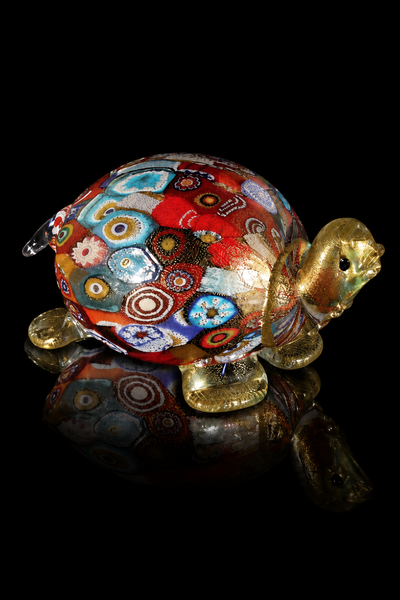


Sculptures — 31 pieces


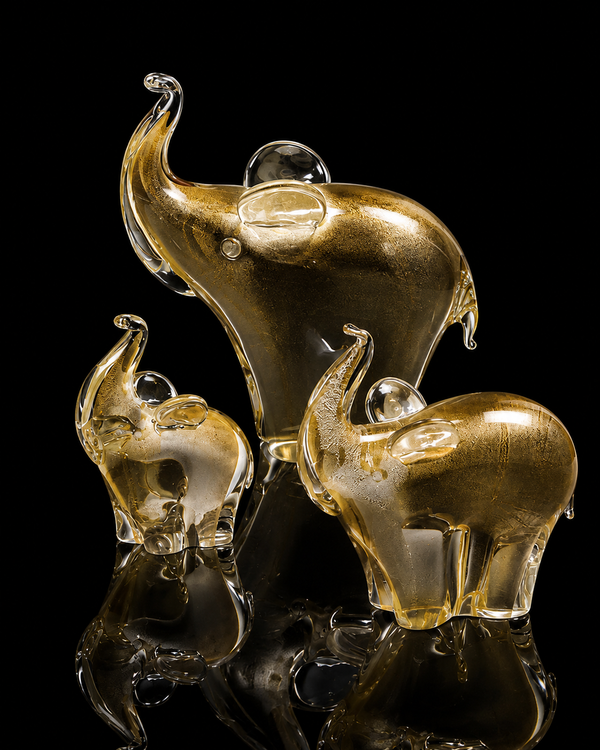


Sculptures
A Murano glass sculpture is shaped entirely free-hand while the glass is still molten — there is no mould to guide the final form, only the master's hands, a steel tool called a borsella, and decades of practice. Techniques like incalmo (fusing two separately blown bubbles of different colour into one seamless piece) and sommerso (colour submerged in layers of clear glass) turn a single gather of molten glass into a bird, a horse, or an abstract form in minutes. Explore the full vocabulary in our guide to Murano glass techniques.
Because no two pieces are ever sculpted identically, an authentic Murano sculpture is inherently one of a kind — and, for the same reason, a growing category for collectors. Our guide to Murano glass as an investment explains what drives value in this market, while our authenticity page covers how every piece we sell is certified.
Collecting Murano Glass Sculpture
Shaped without a mould
A Murano sculpture is drawn out of a glowing gather of glass with steel pincers called borselle, in the few minutes before the glass becomes too stiff to move. There is no mould and no second attempt. Techniques like sommerso (colour submerged in clear layers) and incalmo (two blown forms fused into one) add colour without paint — our guide to techniques shows how each is done.
What to look at before buying
Judge the profile first: a good sculpture reads clearly from across a room, not only close up. Then look into the glass — depth of colour, clean transitions between layers, no cloudiness — and at the base, which should sit flat and true. Complexity costs time at the furnace, so a piece with many applied elements is rarely cheap. Our article on Murano glass and value explains what makes prices differ.
Displaying it well
Glass wants light: a shelf near a window, a lamp behind or above the piece, and a dark surface underneath will do more for a sculpture than any pedestal. Keep it away from table edges, radiators and speakers, and dust it with a soft brush or dry cloth. For the full routine see our care guide. Smaller pieces for gifts are in millefiori animals.
Venetian glass sculpture: marks, labels and what they prove
Collectors ask about signatures first. The honest answer is that a signature proves less than people expect: much authentic Murano sculpture left the furnace carrying only a paper or foil furnace label, which is the first thing to be lost, and an engraved name is among the easiest things to add afterwards.
The glass itself is more reliable evidence. Look for colour built in layers rather than painted on, for the pontil scar underneath, and for the asymmetry that comes of shaping a figure by hand against the symmetry of a mould. A Venetian glass sculpture is a Murano one — the city gives the style its name, the island does the work. Every piece here is sent with a certificate recording its origin.
Frequently asked questions
Is every sculpture unique?
Within a model, yes. The same subject is made again and again, but because it is shaped free-hand the proportions, the run of the colour and the final gesture differ every time — which is why the piece you receive will not be identical to the photograph.
Should a genuine piece be signed?
Not necessarily. Many authentic Murano pieces are unsigned, and a signature on its own proves little — it is the easiest thing to fake. What matters is documented provenance: every sculpture we sell ships with a certificate of authenticity you can verify online.
Is Murano glass a good investment?
Some pieces hold and increase their value, particularly large, complex and well-documented work — but nobody can promise that, and we do not. Buy what you want to live with; our guide to value explains which factors the market actually rewards.
How is a sculpture packed and shipped?
Each piece is wrapped individually and boxed with rigid protection, larger works in custom crates. Shipping is tracked and insured to the door, worldwide.
Does a real Venetian glass sculpture have to be signed?
No. A great deal of genuine Murano sculpture carries only a furnace label, which is usually lost long before the piece changes hands, and some carries no mark at all. A signature is also easy to add to a copy. Judge the glass — layered colour, the pontil scar, hand-made asymmetry — and rely on documented origin rather than a mark.
